Starlink is about to get competition
Amazon says its satellite internet service turns on later this year. Here is what it is, how it differs from the satellite internet you may remember, and how to think about it if your internet provider options are bad.

On July 2, Amazon launched 29 more satellites into orbit. That brings its total to 396, and Amazon says that's enough to start offering internet service in its first coverage areas later this year.
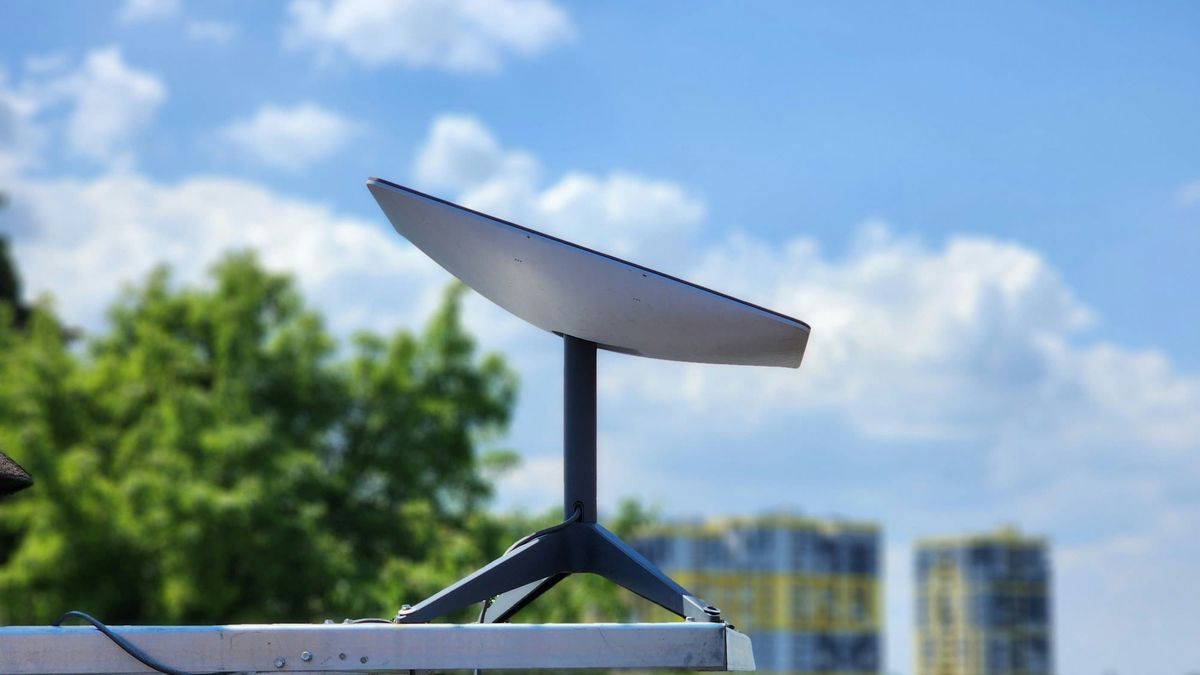
If you live somewhere with poor internet provider options, you've probably heard of Starlink. You may not have heard that a second service like it is coming, and that it's coming from Amazon. It's called Amazon Leo (it used to go by Project Kuiper), and it works the same basic way. You have a dish at your house that talks to a swarm of satellites passing overhead, and that's your internet. No cable in the ground, no phone line, no waiting for a provider to decide your road is finally profitable enough to reach.
For rural readers, it's welcome news. The company that delivers your packages wants to deliver your internet, and it claims the service will be available this year. Before anyone gets excited, it helps to understand what this technology actually is, what Amazon has and hasn't said, and what your options look like today.
Why this isn't the satellite internet you remember
If you've used HughesNet or Viasat, you know the old kind of satellite internet. Pages crawl. Video calls stutter and talk over themselves. It works, sort of, and you pay a lot for the privilege.
The problem is distance. Those services use satellites parked about 22,000 miles up, roughly a tenth of the way to the moon. Every click travels from your house to the satellite, down to a ground station, out to the internet, and all the way back. Even at the speed of light, that round trip takes over half a second. Half a second doesn't sound like much until you're on a video call and everyone keeps interrupting each other.
Starlink and Amazon Leo fly their satellites at around 380 miles instead. Cutting the distance by that much cuts the delay to a few hundredths of a second, about the same as cable internet in town. That one change is why the new satellite internet can handle video calls, gaming, and remote work when the old kind never could. The tradeoff is that satellites that low don't stay parked over one spot, so you need thousands of them streaming overhead to keep a connection going. Which is why these companies keep launching rockets.

The new kind still has limits. The dish needs a clear view of the sky, so heavy tree cover is a real problem. Hard rain can slow it down. And everyone in your area shares the same satellites, so speeds sag in the evening when the neighbors are streaming too. Starlink even charges a one-time fee, from $100 up to $1,000, to new customers in areas it considers crowded.
What Amazon has and hasn't said
Amazon says service starts later this year in two bands of the globe, one in the northern hemisphere and one in the southern, expanding outward from there. The United States is on its list of first countries, along with Canada, the UK, France, and Germany. Amazon has shown off three dishes: a small portable one rated for 100 megabits per second, a home model rated for 400, and a business model rated for a gigabit.

Amazon has not announced a monthly price. It has not announced what the dish will cost you. It has not committed to a date when someone in the US can actually sign up. The closest thing to a price is Amazon saying the home dish costs less than $400 to produce, which is what it costs Amazon, not what it will cost you. Amazon's CEO wrote to shareholders in April that Leo's performance would come "at a lower cost than alternatives." That's an aim, not a number. Any dollar figure you see attached to Leo right now is somebody's guess.
One number stuck out to me. Amazon's own paperwork with the FCC says service begins once 578 satellites are up. It has 396. Amazon says 396 is enough for the first coverage bands, and both might be true. But the company was originally required to have about 1,600 satellites flying by the end of this month, and in June the FCC agreed to let that deadline slide. The full fleet of over 3,200 is still due by mid-2029. That doesn't mean Leo won't happen, but "later this year" is a goal Amazon is chasing, not a firm release date.
The track record backs up some patience here. Amazon originally hoped to have customers online in 2024. Then 2025. Then mid-2026. Now "later this year." The delays mostly come down to rockets. Amazon doesn't own a fleet of proven rockets the way SpaceX does. Amazon pays other companies to launch its satellites, and the new rockets those companies were building all ran years behind schedule. One of them failed a ground test in May, right before it was supposed to carry the next batch of Leo satellites. Amazon has even bought launches from SpaceX, its direct competitor, to keep the schedule moving. That tells us how tight the rocket supply is.
What your options look like today
While Leo stays a promise, here's the field as it stands in mid-2026.
Fixed wireless first, if you can get it. T-Mobile and Verizon both sell home internet that runs over their cell networks, starting around $35 to $50 a month with no contract and no equipment to buy. When it's available and the signal is decent, it's the cheapest way out of bad internet, no dish required. The catch is the word "available." It depends entirely on the cell coverage at your address, and rural coverage maps get optimistic. Both companies let you check your address on their websites, and both offer trial periods. Start there.
Starlink is the one with a track record. The dish runs $349 to $499 depending on model and promotions, and plans run roughly $50 to $120 a month depending on speed tier. Independent testing firm Ookla measured US Starlink customers at a median of about 134 megabits per second down in late 2025, which is fast enough for a household of streamers. The delay is low enough for video calls and gaming as well.
It's month-to-month with no contract and a 30-day return window on the hardware. Starlink is owned by SpaceX, which is Elon Musk's company. However you feel about that, it's the only low-orbit service you can buy today, and the only one with years of measured results behind it.
The old guard is still selling. HughesNet and Viasat both still offer the 22,000-mile kind, with the delay that comes with it. Independent testing puts their measured speeds far below Starlink's. Viasat's main plan is month-to-month. HughesNet wants a 24-month contract, and I'd think hard before signing one. Committing to two years of the old technology right as a second low-orbit competitor arrives is a bad trade unless it's genuinely the only thing that reaches you.
And if your internet in town is merely disappointing rather than rural-bad, the problem may be inside the house rather than on the pole. Rebooting your router fixes more than it has any right to.
So should you wait?
I don't have a satellite dish and I'm not in the market for one, so I have no horse in this race. But if I lived at the end of a gravel road, here's how I'd frame the decision.
Nothing about Leo can be bought today. There's no price, no signup page, and a schedule that has slipped three times. Waiting for it means living with your current internet for some number of months nobody can name, in exchange for a service nobody has priced. That trade only makes sense if your current internet is tolerable.
On the other side, the switching cost is low. Starlink has no contract. Fixed wireless has no contract. If you solve your internet problem now and Leo shows up next year cheaper and better, you cancel and switch. The main thing you'd be out is the dish money.
A few steps you can take:
- Check your address for T-Mobile and Verizon home internet before considering any dish. It's the cheapest option when it exists.
- Avoid new long contracts. Month-to-month keeps you free to jump when the field changes, and the field is about to change.
- Join the waitlist. Amazon's Leo waitlist is free and commits you to nothing. Being on it costs you nothing if the service slips again.
- Watch for two numbers: a monthly price and a US start date. Until both exist, Leo is a plan, not an option.
Whatever happens with Amazon's schedule, a second company racing to sell rural America internet gives the first one a reason to keep its prices in check. You may never buy a thing from Amazon Leo and still come out ahead for it existing. Rural internet has been a one-option market for a long time. It's about to be a two-option market, and that helps you either way.
Source: GeekWire on the July 2 launch and what it means for initial service (July 2, 2026)
Source: CNBC on the 396-satellite total and the service timeline (July 2, 2026)
Source: The FCC's order waiving the July 2026 deployment deadline (June 5, 2026)
Source: GeekWire on the FCC waiver (June 8, 2026)
Source: SpaceNews on the Leo terminals and undisclosed pricing (November 24, 2025)
Source: Fierce Network on Ookla's Starlink speed measurements (April 2026)