How Much Water Does AI Really Use?
A single AI prompt uses far less water than the headlines suggest, somewhere between five drops and a few tablespoons. The fight worth having is about where these data centers get built, often in the driest places in the country.

Last week someone asked me what I thought about AI and water. I'm a tech person and I use AI every day, at work and at home. I had just finished reading Empire of AI, so I knew the story of how these systems got built and who built them. And I still couldn't give an honest answer. I wasn't sure.
I had heard the same things everyone has heard. That AI is going to boil the oceans. That every silly picture you make drinks a bottle of water. I have friends, family, and coworkers who feel strongly about the data centers going up and the water they pull, and their concern is real. I take it seriously. But when I went looking for my own answer, I realized I had been carrying opinions I had never checked.
So I checked. This is what I found.
One thing I need to point out. This is only about water and the environment. Not jobs, not plagiarism, not the other fights people are having about AI. Some of those worry me more than the water does. But they are different arguments with different facts, and trying to cram them all into one piece is how you end up saying nothing well. So: water.
Here is what surprised me most. I expected the numbers to be bad. I went in half-believing the dire version. The numbers are smaller than I thought. Not zero, and not nothing, but smaller. What deserves anger turned out to be somewhere I wasn't looking.
Which number are you being handed?
Before any figure means anything, you have to know which kind it is. There are three, and people mix them up constantly.
- Withdrawal is water taken from a source and mostly returned. Borrowed.
- Consumption is water that's gone, usually evaporated in a cooling tower. Spent.
- Indirect is the water used somewhere else, mostly at a power plant, to make the electricity the data center runs on. You never see it at the building, but it's a real cost.
Those three can differ by more than ten times for the same facility, according to the US Department of Energy's Lawrence Berkeley National Lab. So when a headline says AI "used" some enormous number of gallons, the first question is which kind. A lot of the scariest figures are withdrawal, water that went right back where it came from, reported as if it vanished. I had read plenty of those headlines. I had never stopped to ask which number I was looking at.
So how big is it, really?
Now the scale. Most of the published numbers are for data centers in general, not AI specifically. Data centers are the buildings behind almost everything online, AWS, Azure, Google Cloud, your email, your bank, your streaming. AI is the fastest-growing tenant in those buildings, but right now it's a slice, not the whole thing. Plenty of headlines use "data centers" and "AI" interchangeably.
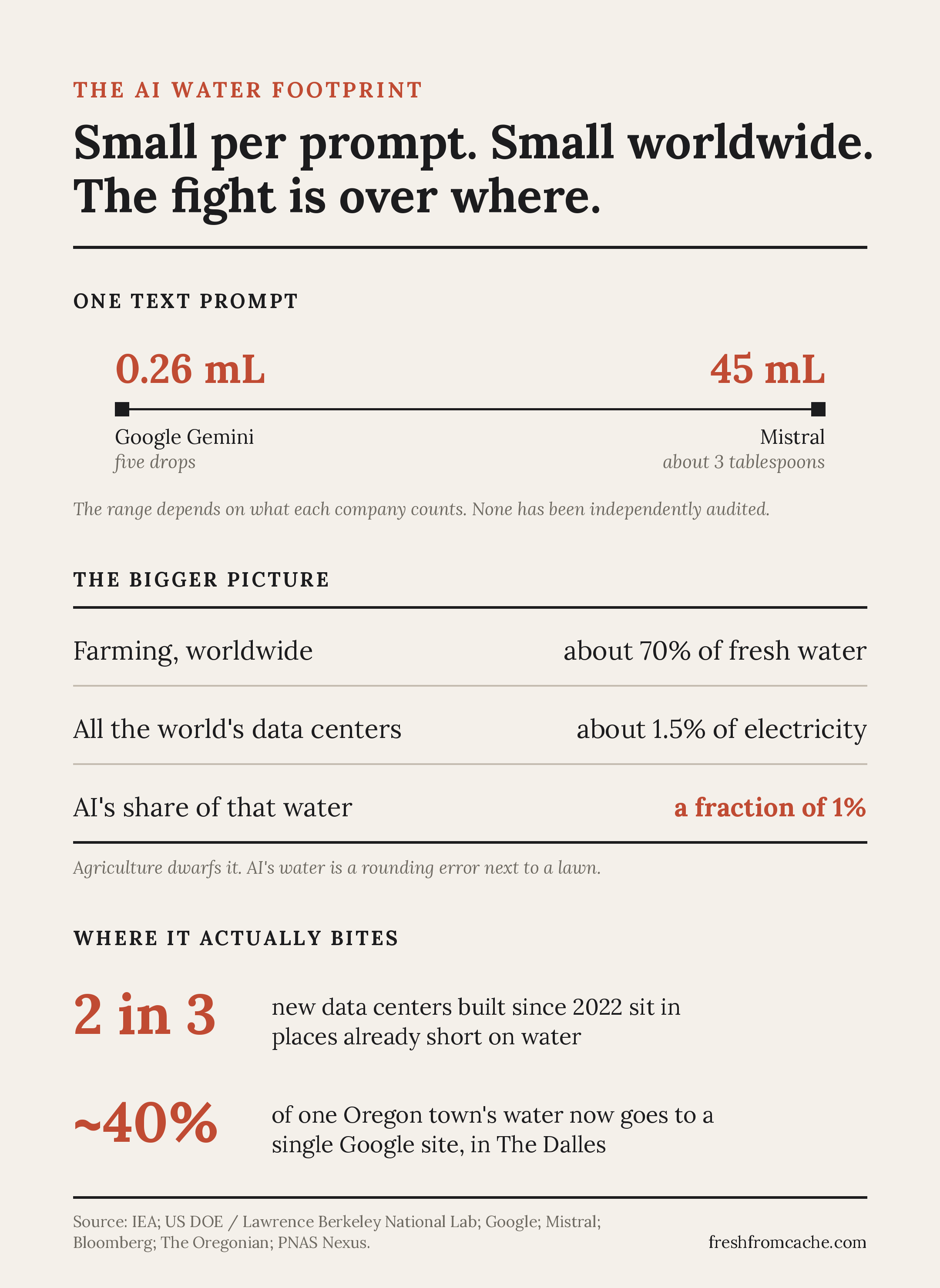
All the data centers on earth used about 1.5% of the world's electricity in 2024, by the International Energy Agency's count, and about half a percent of global carbon emissions. In the US, data centers used about 17 billion gallons of water directly for cooling in 2023, by the Energy Department's Lawrence Berkeley National Lab count. That is a small share of what the country spends on its farms and lawns. Per prompt, the water usage looks small. Google published a figure in 2025 putting a typical text prompt to its Gemini model at about 0.26 milliliters, about five drops from an eyedropper. Sam Altman put ChatGPT in the same range, about a fifteenth of a teaspoon.
Those low numbers come from the companies themselves. Google's came out of its own technical paper, not independent peer review. It covers text prompts only, not the training behind the model and not image or video generation. When outside researchers run the math, they land much higher.
Mistral, another AI company, published a life-cycle estimate of about 45 milliliters for one longer response. So the real range for a single prompt sits somewhere between five drops and a few tablespoons, depending on who is counting and what they count. No one's number has been independently audited.
I wanted to make that figure digestible, so I did some rough math on myself. I've used AI fairly heavily since about April, call it three hours a day. A full year of that habit comes out to about ten liters of water on Google's figure, and over a thousand on the higher independent ones. In plain terms, that is anywhere from about four days of my drinking water to well over a year of it, depending on whose number you trust.
A caveat on that math. It's mine, not a study's, and it's meant to give a sense of scale, not a verdict. And I'm not going to compare it to a hamburger, even though that comparison is everywhere. The water in a hamburger is mostly rain that fell on a field and would have fallen anyway. That's a different kind of water than what a data center evaporates, and mixing the two is exactly the sloppiness I'm trying to avoid. Drinking water to drinking water is a fairer comparison.
Putting it up against everything else
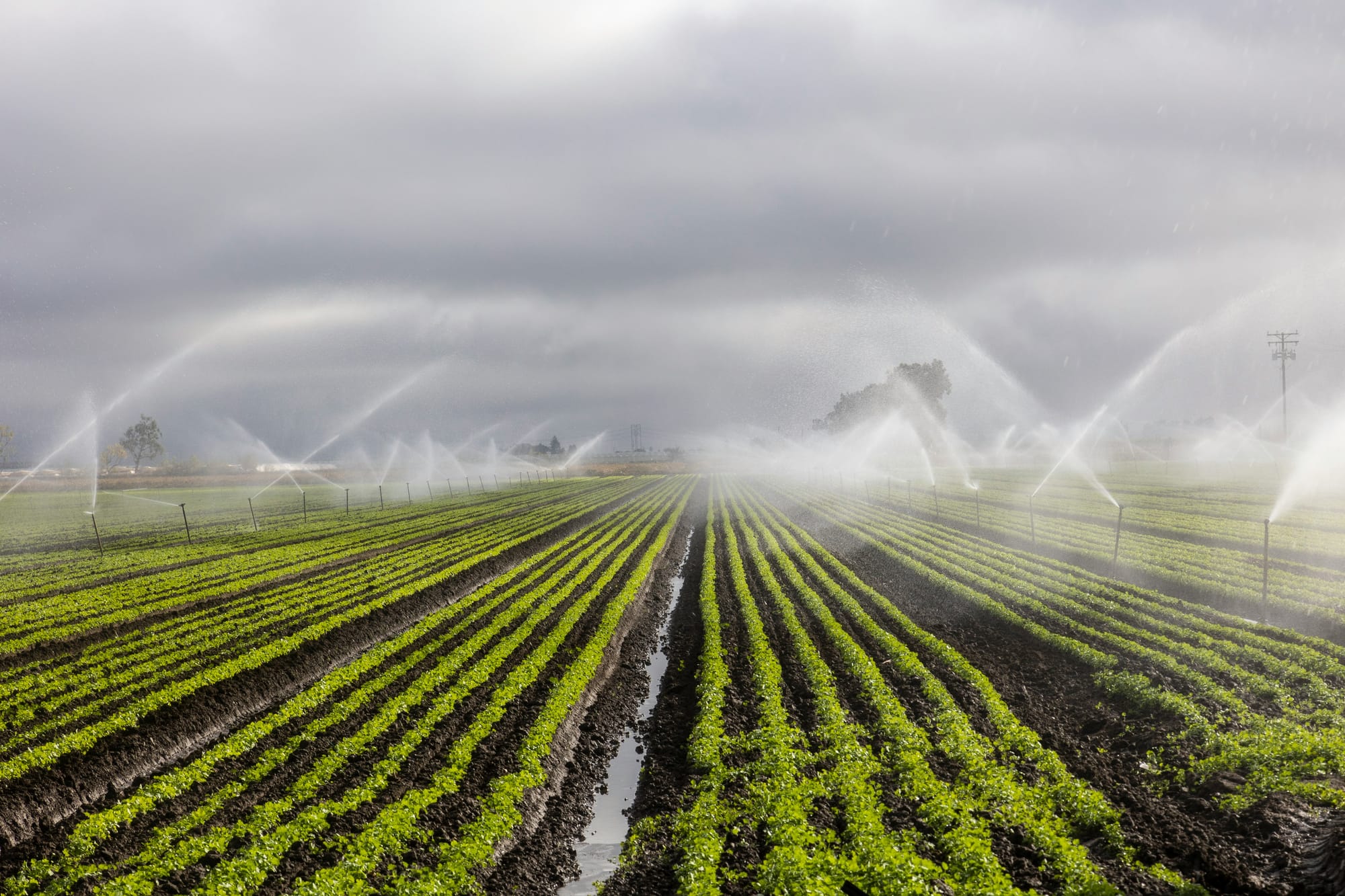
For the bigger picture, agriculture is the giant in the room. Farming takes about 70% of the fresh water people withdraw worldwide, and has for decades. AI, counted generously, is a fraction of one percent.
Although here's a wrinkle I enjoyed. When I went to pin down that 70% figure, I found a 2025 paper that traced it back through fifty years of citations and found almost no hard data underneath. The real number could sit anywhere from 45 to 90%. So even the most-repeated water number on earth turns out to be more estimate than fact. The ranking is solid. Farming is first. But the exact percentage is a guess.
Why people are upset
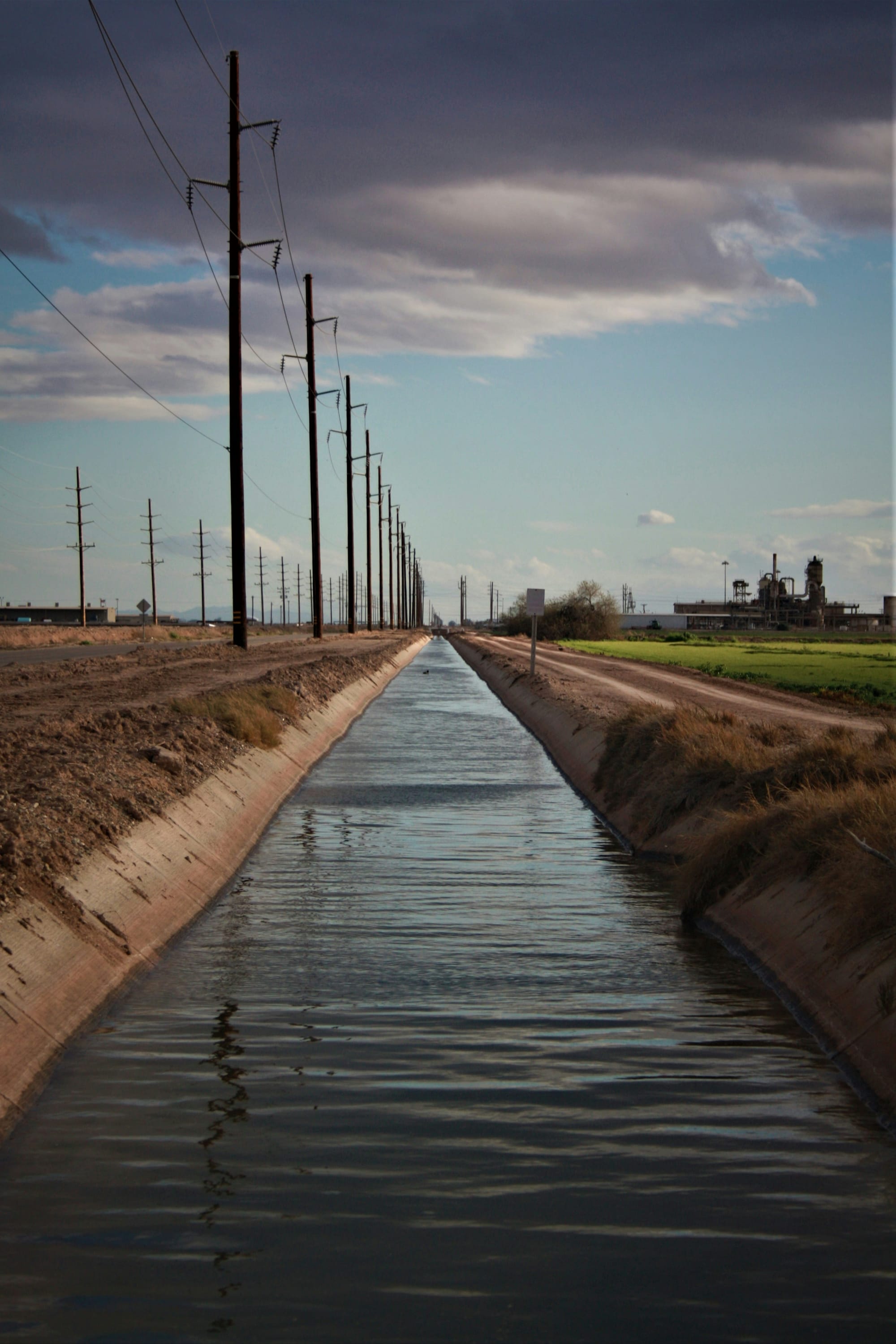
Water is local, not global. A data center that's a rounding error against the whole planet's supply can still be a real problem for one town, because it's drinking from that town's well. In The Dalles, Oregon, a Google facility came to use about 40% of the city's water. The same buildout is now reaching Hillsboro, Oregon. In parts of Georgia and Arizona, people have watched data centers move in next to reservoirs that were already low.
About two-thirds of the data centers built or planned since 2022 went into areas that were already short on water, according to a 2025 Bloomberg analysis. That isn't an accident. Dry air is good for cooling. Land is cheap. Power is cheap. The tax breaks are enormous; Virginia and Texas each give up about a billion and a half dollars a year in data center exemptions. And water, in most places, is priced so low there's no reason to conserve it. So the companies build where it pencils out, and sometimes that's the worst possible place for the water table, and the people who live there had no say.
It isn't about "AI is boiling the oceans." The water AI uses, in total, is modest. The trouble is that a handful of companies are sinking enormous straws into some of the driest ground in the country because it's cheap. The people living on top of that ground are left to argue about it after the concrete is poured. It feels like money making the call, with the residents as an afterthought.
Pressure for change
This is starting to change, and it's changing the way these things usually do, under pressure.
New data centers increasingly use closed-loop cooling, which fills once and recirculates instead of evaporating millions of gallons. Google now says it will only use water cooling where the local supply is healthy. In 2026, lawmakers in more than 30 states introduced over 300 bills dealing with data centers and the resources they use. Tucson's city council flatly turned down a large data center over water in 2025.
That happened because of public pressure and bad press, not corporate generosity. Which is how most of this works. A technology shows up messy and wasteful. It gets cleaned up once the pushback starts costing the companies money.
What I think, for now
The strongest argument on the worried side has nothing to do with today's numbers. It is about the slope. Each prompt keeps getting more efficient, but if we run a thousand times as many of them, the total still climbs. Efficiency that gets eaten by growth is not efficiency.
What worries me is not this year, but where it points. These companies are betting on compounding growth. What I think today could move tomorrow, and an opinion on something this new should be allowed to shift.
If you're still uneasy
Your own use barely registers. Your car and your thermostat dwarf anything you will ever do in a chat window. But if you want to lower your footprint, lean on text instead of AI video, and skip the giant requests you will never actually read.
The real impact happens outside the chat window. Make the companies disclose what they actually use. Keep the thirstiest cooling out of the driest places. Make them pay for their own strain on the grid instead of passing it to your water bill.
The water AI uses is real, and it's smaller than the headlines say. The fight worth having was never about whether AI gets to exist, but about where we let it get built, and whether we make the people building it tell us the truth.
Where your line sits past that, how much water is too much, how much change is worth it, that's yours to draw. Everybody has their own line. We just need to be looking at the same numbers when we do.
I'm curious where you land on this, especially if you have numbers I didn't find. If you see it differently, tell me at joel@freshfromcache.com.
Sources
- International Energy Agency, Energy and AI (2025).
- US Department of Energy, Lawrence Berkeley National Lab, 2024 United States Data Center Energy Usage Report.
- Google, environmental report on per-prompt AI resource use (2025).
- Sam Altman, "The Gentle Singularity" (2025).
- Mistral AI, life-cycle environmental analysis of an AI assistant (2025).
- Puy et al., "Widely cited global irrigation statistics lack empirical support," PNAS Nexus (2025).
- Bloomberg, reporting on data centers in water-stressed regions (2025).
- The Oregonian, reporting on Google water use in The Dalles (2022, updated 2026).
- Virginia JLARC and the Texas Comptroller, data center tax exemption figures.
- MultiState, state data center legislation tracking (2026).