Does technology make us lonely?
Loneliness gets compared to smoking fifteen cigarettes a day. The researcher behind that number keeps a page on her own website correcting how people quote it. Here is where it came from, who is loneliest, and what the evidence says about your phone.

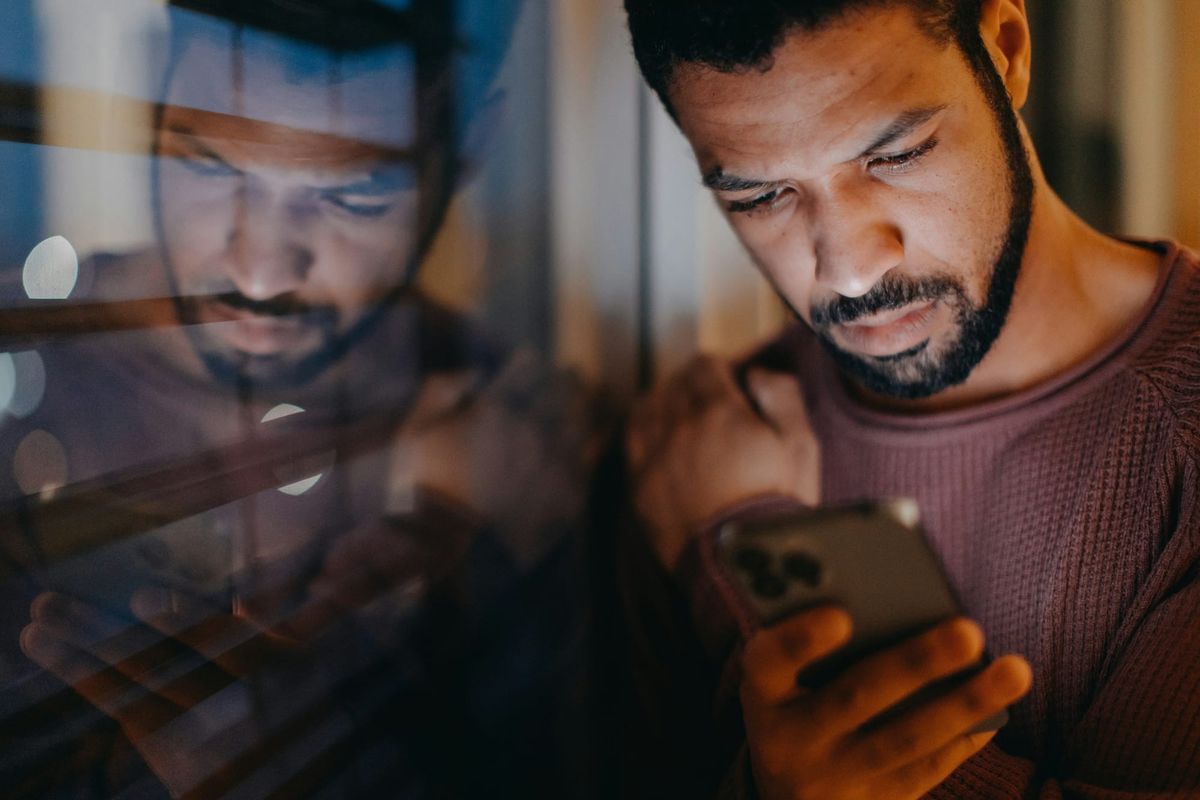
My family is either hours away or a plane ride. My job moves me between buildings, so I can go a whole week without seeing the same face twice. Most of my social life happens on a screen.
Every few months a headline tells me that is a problem.
If your family is a flight away, or you are homebound, or the town you live in does not have many of your people in it, you may have been reading the same thing for years.
So I went and read the research instead of the headlines about the research. Some of it surprised me. The number that gets repeated has been bent out of shape. Loneliness and isolation get talked about as one thing when they are two. And the fight over whether phones are doing this has no clear winner.
The line you have probably heard
Loneliness is as bad for you as smoking fifteen cigarettes a day.
That claim has a study behind it. It comes from a 2010 paper by Julianne Holt-Lunstad and her colleagues, who pooled 148 studies covering more than 300,000 people followed for seven and a half years on average. People with stronger social relationships had about a 50 percent greater likelihood of survival over that stretch.
The authors then measured that effect against other risks we already take seriously. Smoking was one of them. So were alcohol, inactivity, and obesity.
That set a benchmark. It was not an experiment. Lonely people were not put in one room and smokers in another and then compared.
Holt-Lunstad keeps a page on her own website correcting how the claim gets used. Her careful phrasing is that lacking social connection is comparable to smoking up to fifteen cigarettes a day. The original measure combined several different counts. How big somebody's social network was, how much support they had, how isolated they were. The feeling of loneliness was only one part of it.
The U.S. Surgeon General's 2023 advisory put the comparison front and center. That is why it stuck.
Andrea Wigfield, who runs the Centre for Loneliness Studies at Sheffield Hallam University, wrote with two colleagues that the comparison could be called sensationalist, and that it can add to the burden and the stigma already carried by lonely people. Telling somebody who already feels alone that they are doing the equivalent of a pack a day is not information that helps them. That same 2010 paper put the risk in the range of heavy drinking and above inactivity or obesity, and nobody ever quotes those. Everybody already agrees cigarettes are bad for you. Nothing else on that list is that simple, and none of it makes as good a headline.
The loneliest people are not who you think
Loneliness and social isolation get treated like one word. They are two different measurements. Loneliness is the feeling that your relationships fall short of what you need. Social isolation is a count of how much contact you have. You can have plenty of one and none of the other.
In June of last year the World Health Organization's Commission on Social Connection published its first global report. About one in six people worldwide are affected by loneliness, and the Commission estimates it contributes to roughly 871,000 deaths a year. The highest rates were among adolescents and young adults. Social isolation goes the opposite direction, and reaches up to one in three older adults.
Young people report the feeling more. Older people have less of the contact. Those are two separate findings, and they get quoted as if they were one.
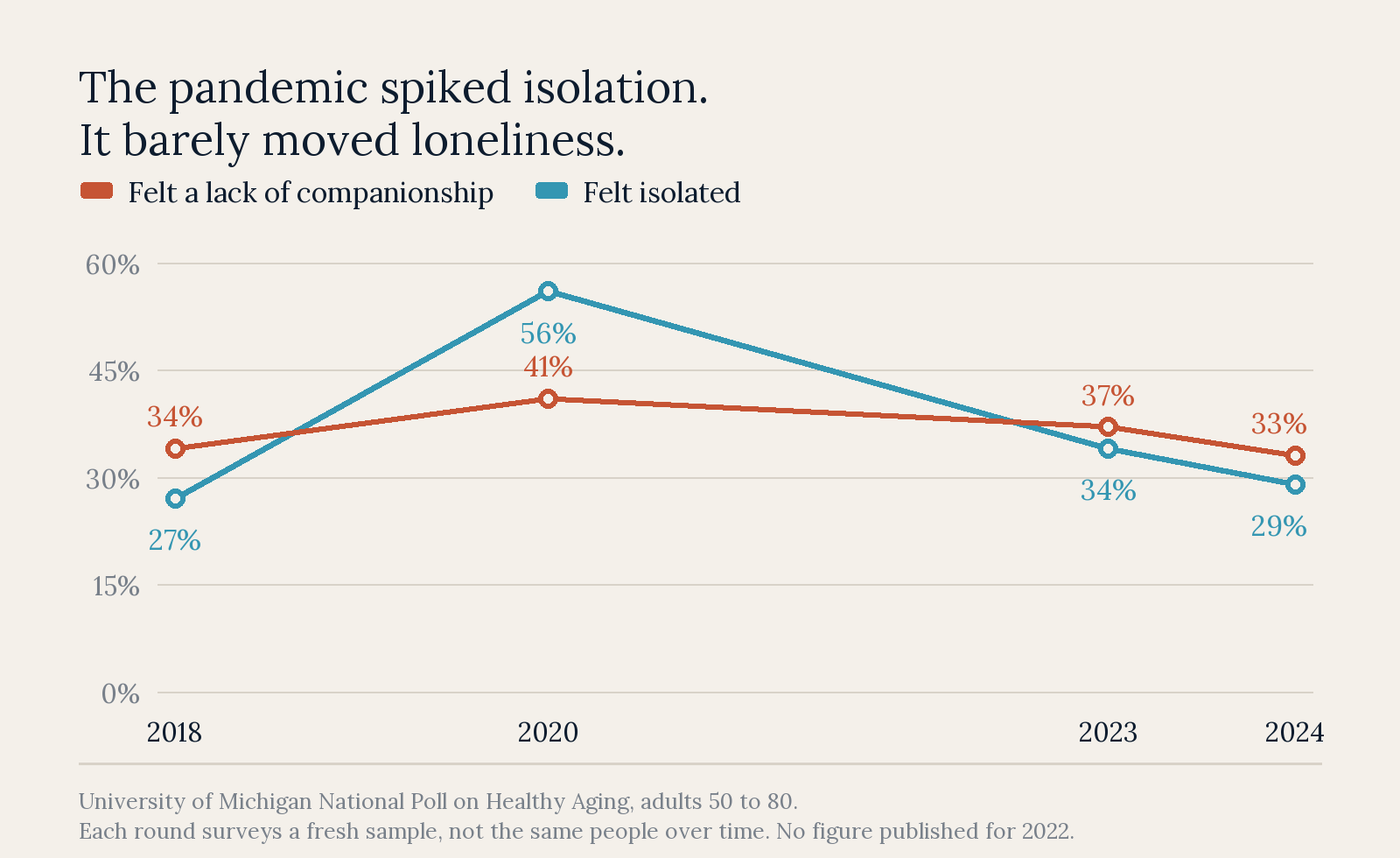
When somebody says lonely, I picture an older person by themselves in a house, and I suspect you might too. That picture fits isolation, but not necessarily loneliness. In the United States, a University of Michigan poll of adults 50 to 80 found 33 percent felt lonely at least some of the time in 2024, against 34 percent in 2018. Six years with no real movement.
Does the phone cause it? Nobody knows.
I would like to give you a cleaner answer than that. There isn't one.
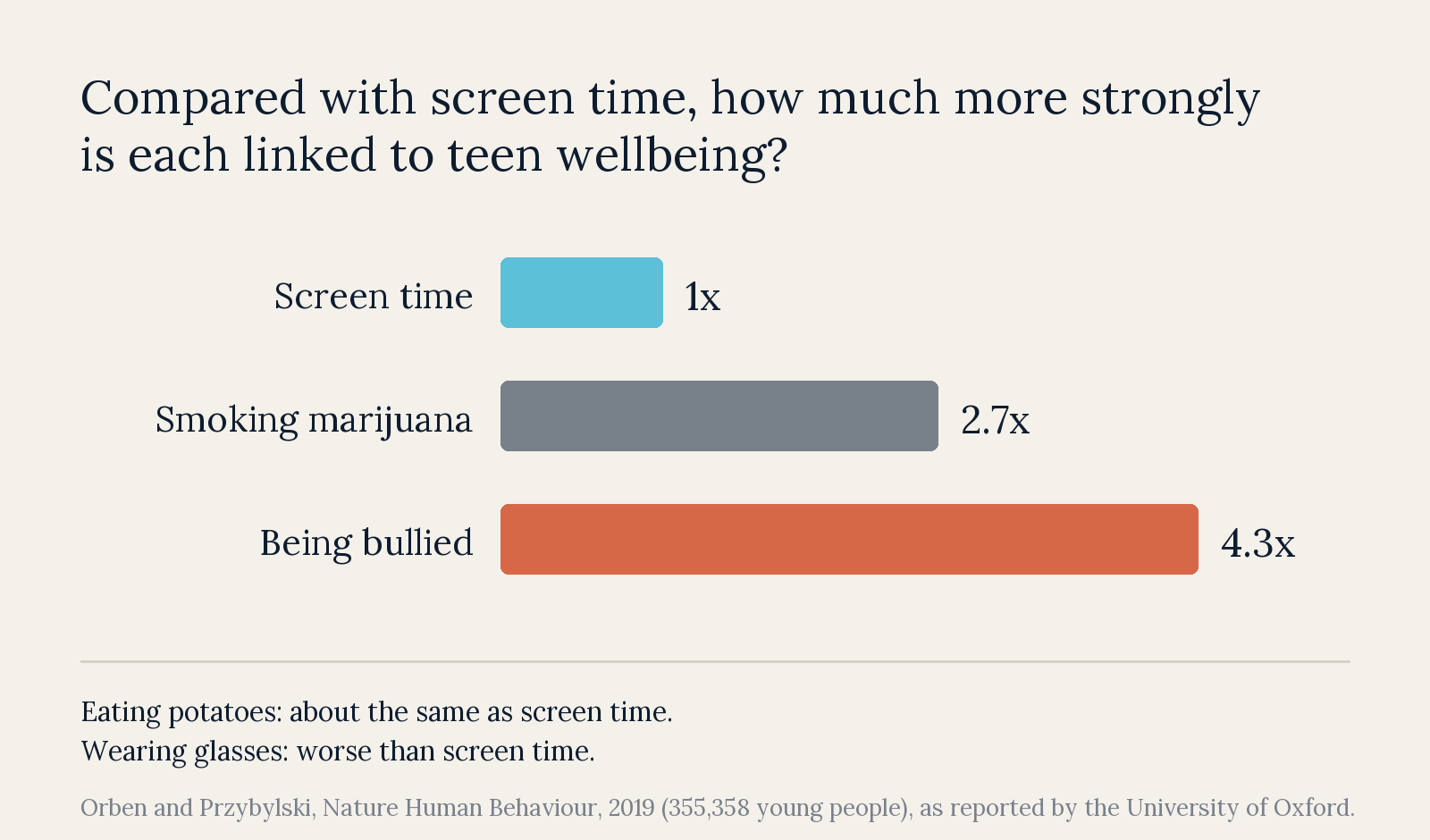
In 2019, Amy Orben and Andrew Przybylski went at three enormous datasets covering more than 350,000 young people. They ran the numbers every defensible way instead of picking the ones that made a good headline. Technology use accounted for at most 0.4 percent of the variation in wellbeing.
To show what an effect that size looks like, they lined it up against other questions in the same surveys. Eating potatoes was almost as bad for teenage wellbeing as screen time. Wearing glasses was worse.
Jean Twenge, Jonathan Haidt and their colleagues tell a different story. Their study of more than a million 15- and 16-year-olds found loneliness at school rising between 2012 and 2018 in 36 of 37 countries, alongside spreading smartphone access. The paper says plainly that those patterns cannot prove causation. Haidt has since argued the causal case at book length.
The mechanism they propose is displacement. A day has only so many hours. Time on a phone has to come from somewhere.
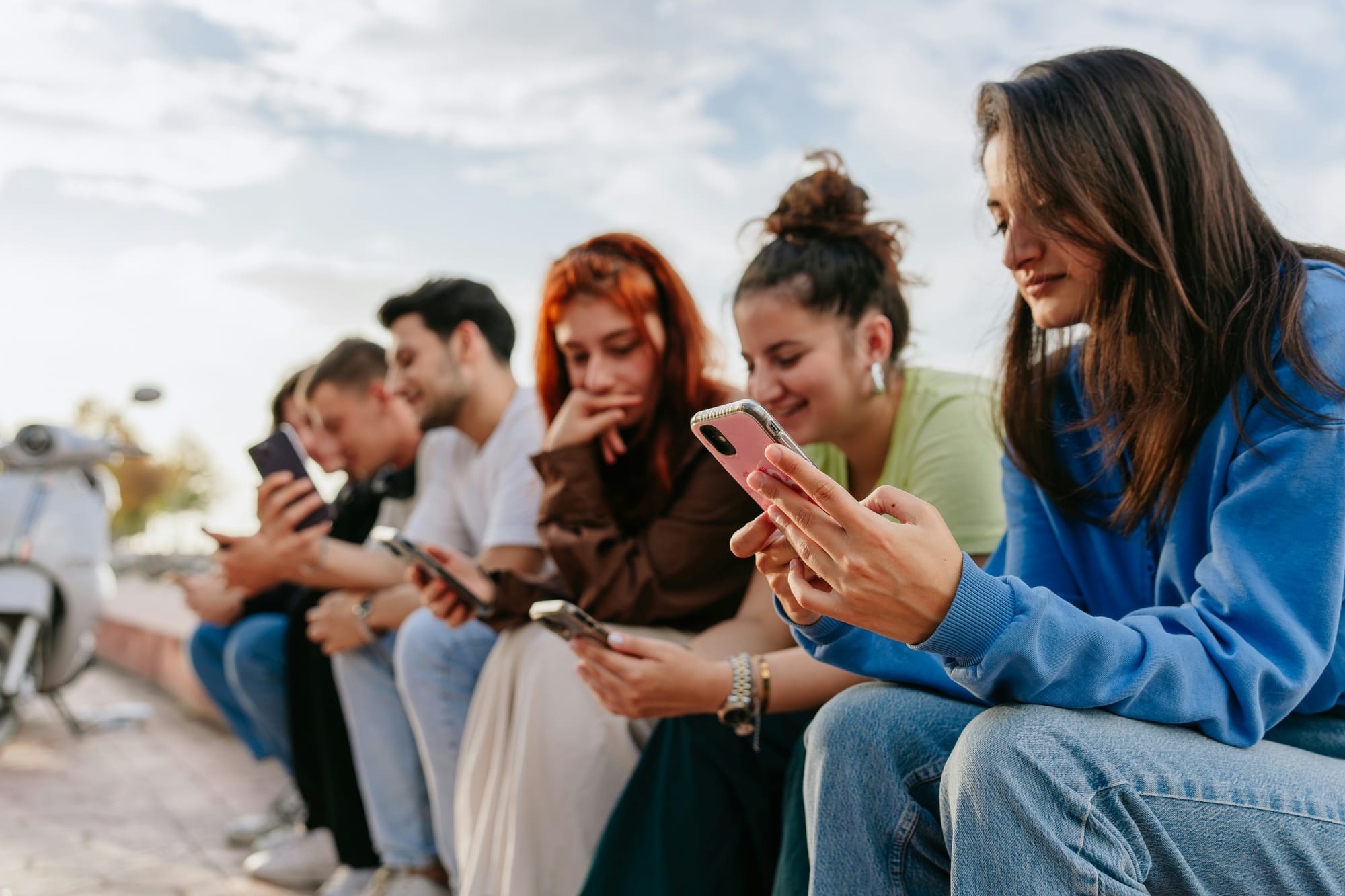
Twenge's own displacement paper, covering 8.2 million young Americans, found the trade happening at the level of a generation and not at the level of a person. College-bound high school seniors in 2016 spent about an hour a day less with other people than seniors in the late 1980s. But within any given year, the kids using the most social media were also the kids seeing their friends the most. Something took that hour. Nobody has shown it was the phone.
Instead of watching what people already do, some researchers take social media away on purpose and measure what happens. Two teams have now pooled that same rough pile of experiments and come to different conclusions.
Christopher Ferguson's 2024 analysis put the average benefit of cutting social media close enough to zero that he could not rule zero out. A 2025 meta-analysis by Kaitlyn Burnell and her colleagues, covering 32 randomized trials and 5,544 people, found a real improvement in wellbeing from restricting social media. The improvement measured 0.17, which is small.
Burnell's team also found the benefit did not depend on how long the restriction lasted, or on the age or makeup of the group. And every one of those trials ran on college students and adults, average age 23, so none of it tells you much about a twelve-year-old.
Candice Odgers at UC Irvine argues that some young people may use social media differently because they were already struggling. Her evidence is about youth mental health rather than loneliness, so I will not stretch it further than that. It is still a warning about how little a correlation can tell you about which one caused the other.
The reason nobody can give you a clear answer is that the experiment it would take is not one anybody can run. Ten thousand children, half given phones and half given none, followed for fifteen years. Short of that, everyone is arguing over which imperfect substitute to believe, and two careful people can read the same studies and walk away with opposite conclusions.
What does hold up
Time by itself is a weak measure. The number of hours tells us very little.
For a while the research offered a tidier replacement. Passive use meant scrolling, watching, keeping tabs on people. Active use meant talking to somebody. Passive was supposed to hurt through comparison, active was supposed to help through support.
That model has not survived intact. A 2024 meta-analysis of 141 studies found most of those associations were negligible. The effects that did turn up shifted by age, by outcome, and by context. The authors warned against the neat rule that active is good and passive is bad.
My read is that warm back-and-forth contact with somebody who already knows you matters more than counting hours. A sister, an old friend, the coworker you like. Not an audience you are performing for.
A product is not neutral about which of those you get. Most apps open on a feed. Scrolling is already in front of you. Talking to one person means leaving it. Both are available, but only one is the default.
An AI companion goes a step past that. On a feed, the app decides what is easy, and there are still real people somewhere on the other end. With a companion app, the product is the other end. There is nobody there.
I wrote a piece on what we knew about AI companions and mental health, and the evidence has changed since.
A Stanford team published a study this month of 1,131 people who use Character.AI, with nearly half a million of their real messages alongside the survey answers. The people using chatbots out of curiosity or to get work done reported better wellbeing than average. The lower wellbeing showed up among people with small social networks who were using the chatbot for company. It was worse with heavier use, and worse again among the people who told it more personal things.
The researchers are careful that this is an association and that it is not uniform. But the people using it for companionship were the ones reporting the worst outcomes.
A chatbot agreeing with you can feel a lot like being understood. If you are already short on people who understand you, agreement is an easy thing to accept instead. And it is built to agree with you, which is a product decision and not a personality.
You cannot hand somebody a group and call it connection
In 2021 a team led by Syed Ghulam Sarwar Shah pooled the trials of digital programs built to reduce loneliness in older adults. Six studies, 646 people, average age in the seventies. Four of the six were randomized, and every program ran at least three months. They were social networking platforms built for seniors, and web-based group discussion programs.
No significant reduction in loneliness at three months, at four, or at six. The evidence ran from very low to moderate quality.
One of those trials handed its control group a binder instead of the software. Printed pages, the same sort of material the program delivered on a screen, sitting in a three-ring binder on a table. It did about as well.
The reviewers had a theory about why. A program like this may not reach loneliness unless it also deals with what sits underneath it, which is often mistrust, low self-esteem, and a fear of rejection. That fits the wider research. The interventions with the largest measured effect work on how a lonely person thinks about other people, rather than on adding names to a list.
Putting a lonely person on a platform with a group to join does not reliably help. That is a narrower claim than technology doing nothing for older adults, and it would be a mistake to read it that way.
Technology is not social media. A hearing test that came with the earbuds already in the drawer is technology. So is the magnifier already in your phone. So is a video call with your own daughter. Those are tools doing one specific job for one specific person, and none of them were in that study.
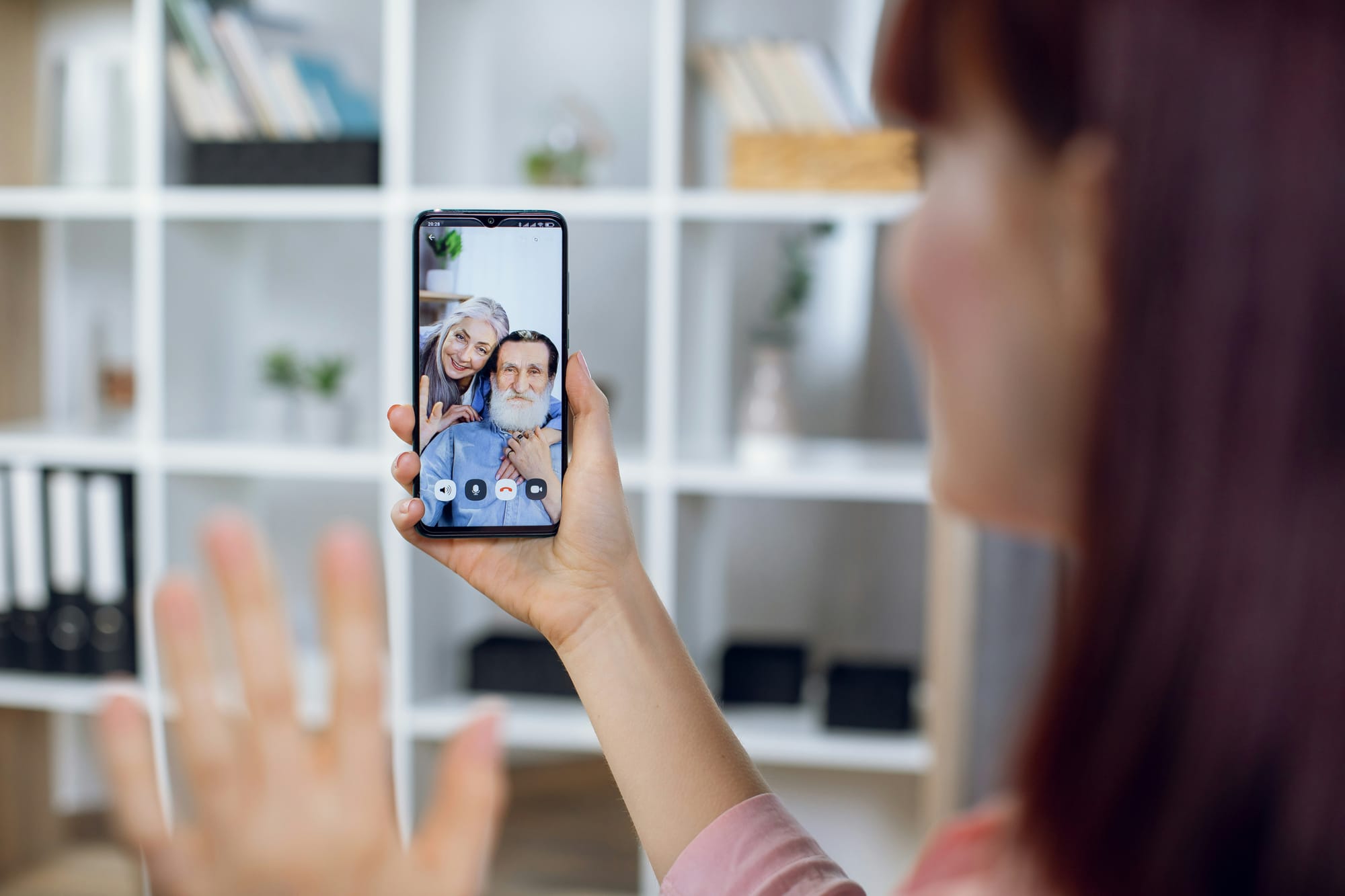
Each one removes a barrier between people who were already trying to reach each other.
Where this leaves me
I remember a little of life before the internet, but by ten I could not get enough of AIM and MSN Messenger. Online I can say what I mean, and I get a second to work out what that is. In person I am shy for a long time before I am me. One night out with a group and I need the next day to recover. Stay up late talking to people online and I am fine by morning.
There is a number that cuts against me. The WHO found its highest loneliness rates among adolescents and young adults, the most online-native people alive. That might be a warning about growing up with smartphones and social media. It might also be that adolescence has always been hard and we are only now measuring it.
In-person contact is not optional or lesser. It is different, and the difference matters. Bonds form easier face to face and you get a truer picture of who somebody is.
But if your family is a flight away, or you are homebound, or the town you live in does not have your people in it, you have spent years being told that the technology keeping you tethered could be hurting you.
The research does not support that. It also does not promise you that every hour online is good for you. What it does say is that the hours are a poor measure, and that who you are talking to tells you far more than how long you were there.
So use the tool for the relationship you want. If you opened the app because you miss somebody, message them. If the group chat leaves you feeling closer to your friends, stay in it. If the feed leaves you feeling worse, close the feed rather than treating the timer as the problem.
If the room where your people are happens to be on a screen, that counts.
Nobody ever told me that and I wish somebody had.
This piece is about ordinary loneliness, which is not the same thing as a crisis. If yours is sitting heavier than that, the 988 Suicide and Crisis Lifeline is free, always open, and takes calls and texts.
Sources
Every study named in this piece, in the order it appears. Where a paper sits behind a paywall, the link goes to the abstract and the figures.
- Holt-Lunstad, J., Smith, T. B., & Layton, J. B. (2010). Social relationships and mortality risk: a meta-analytic review. PLoS Medicine, 7(7). Link
- Holt-Lunstad, J. “15 Cigarettes” — the author’s own page correcting how the comparison gets quoted. Link
- Office of the Surgeon General (2023). Our Epidemic of Loneliness and Isolation. U.S. Department of Health and Human Services. Link
- Wigfield, A. and colleagues (2023). Is loneliness really as damaging to your health as smoking 15 cigarettes a day? The Conversation. Link
- World Health Organization Commission on Social Connection (2025). First global report on social connection. Link
- World Health Organization (30 June 2025). Social connection linked to improved health and reduced risk of early death. Link
- University of Michigan National Poll on Healthy Aging (2024). Loneliness and social isolation among adults 50 to 80. Link
- Orben, A., & Przybylski, A. K. (2019). The association between adolescent well-being and digital technology use. Nature Human Behaviour, 3(2), 173–182. Link
- Twenge, J. M., Haidt, J., and colleagues (2021). Worldwide increases in adolescent loneliness. Journal of Adolescence. Link
- Twenge, J. M., Spitzberg, B. H., & Campbell, W. K. (2019). Less in-person social interaction with peers among U.S. adolescents in the 21st century and links to loneliness. Journal of Social and Personal Relationships, 36(6), 1892–1913. Link
- Ferguson, C. J. (2024). Meta-analysis of social media reduction experiments. Link
- Burnell, K., Meter, D., Andrade, F., Slocum, A., & George, M. (2025). The effects of social media restriction: meta-analytic evidence from randomized controlled trials. SSM – Mental Health, 7, 100459. Link
- Odgers, C. (2024). The great rewiring: is social media really behind an epidemic of teenage mental illness? Nature. Link
- Godard, R., & Holtzman, S. (2024). Are active and passive social media use related to mental health, wellbeing, and social support outcomes? A meta-analysis of 141 studies. Journal of Computer-Mediated Communication, 29(1). Link
- Zhang, Y. and colleagues (2026). Interaction with AI companions and psychological well-being. Nature Human Behaviour. Link
- Shah, S. G. S., Nogueras, D., van Woerden, H. C., & Kiparoglou, V. (2021). Evaluation of the effectiveness of digital technology interventions to reduce loneliness in older adults. Journal of Medical Internet Research, 23(6), e24712. Link
- Masi, C. M., Chen, H. Y., Hawkley, L. C., & Cacioppo, J. T. (2011). A meta-analysis of interventions to reduce loneliness. Personality and Social Psychology Review, 15(3), 219–266. Link