An IT Guy on Vacation
I went on vacation to shut my brain off. Naturally, I spent it finding the Wi-Fi access points hidden in a cruise ship's walls.


Do you ever think about how much technology it takes to run a cruise ship? Probably not, and that is by design. A cruise is built to feel effortless, so the last thing anyone wants is for you to notice the wiring holding it together. I noticed. I couldn't help it.
It had been almost two years since I had taken any real time off. My wife and I both changed jobs not long after our last vacation, and the stretch in between was mostly just getting our footing again. New jobs, new hours, new routines. By the time we could finally get away, we did not want a trip that felt like work. We wanted somewhere warm with everything included, where the hardest decision was what to eat and when to get in the water.
Getting away is hard for us anyway. We have two wonderful, completely spastic dogs who happen to be very needy, and there are maybe five people on the planet who could stand a week with them. It usually falls to my mother-in-law, but she has been swamped lately too. So a real vacation takes some luck. This time the stars aligned.
The last trip we planned ourselves was London, and I loved it. But exploring a new country is a lot of planning and logistics. A cruise is mostly easy. You hustle to get to the ship, but once you are on, the freedom is hard to match. You can eat what you want, see what you want, or do nothing at all. We needed that more than we needed another country. You still see somewhere new, but it is a curated version of it. Exploring-lite.
For the most part, the not-thinking worked. The day job lifted completely, mostly because I have someone on my team who is good at handling things, though Fresh From Cache and my own consultancy did tag along; uninterrupted time to tinker with your own projects is its own kind of vacation.
When I take a shower, I like to watch YouTube. I know, it is a little odd, but it is not so different from people who listen to music in there. So every time I went to take a shower, I would get my YouTube loaded up, hop in, and then it would stop working. I was connected to Wi-Fi, but the video just would not load.
Eventually I caught the pattern. Anywhere else on the ship, it was fine. The second I walked into the bathroom, I had nothing. And I was still connected to the AP(Access Point for Wi-Fi), so it was not as if the bathroom were some makeshift Faraday cage. When I looked at my settings, I got that message every IT person dreads: connected, no internet.
In my experience, that message usually means one of a couple of things. Either the AP you are connecting to is having issues talking to the rest of the network, or the information the AP is handing you is wrong. I have also seen it from certificate issues and some DHCP wonkiness. So I had theories. The problem was that none of them mattered, because there was nothing I could do about it from inside a shower. If I was in the bathroom, nothing I tried made the internet work. Just outside the bathroom? Perfect.
It was not a big deal, but it became a running joke, and it intrigued my IT brain. I wanted to know why, and I wanted to know how to fix it.
Once I accepted my fate, I started paying attention to everything that was working instead, which on a ship that size is almost everything, almost all the time. The bathroom thing stuck with me, though. It nagged at me enough that when I got home, I went looking for how any of it actually works. (Yes. I researched cruise ship Wi-Fi after my cruise. This is the kind of thing you are dealing with here.)
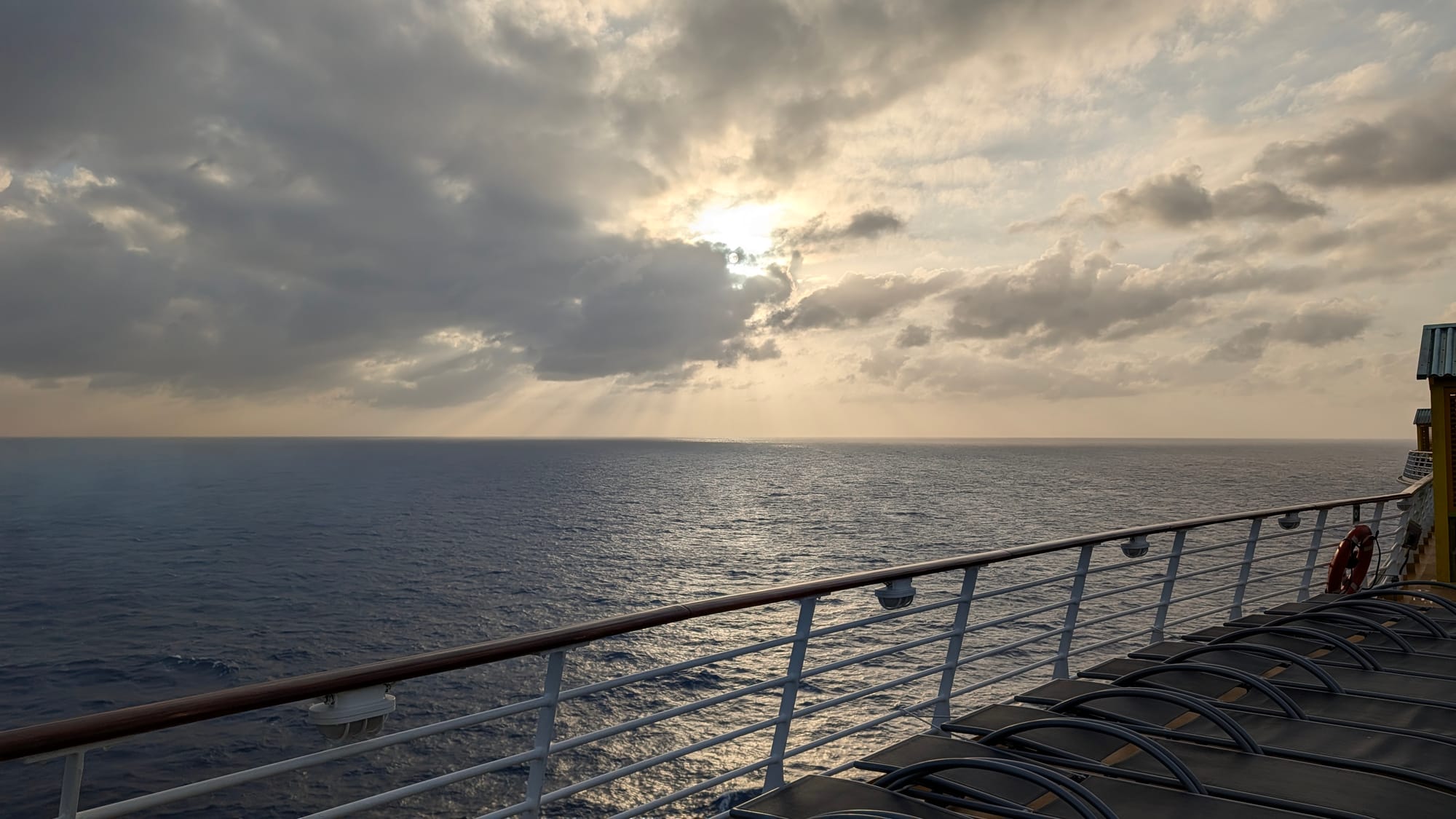
It starts in space. Royal Caribbean runs Starlink, branded as VOOM, rolled out across the fleet starting in 2022. The reason it no longer feels like the garbage cruise Wi-Fi used to be is that Starlink's satellites sit in low Earth orbit, much closer than the old ones, so the lag is a fraction of what it was. There I was, streaming YouTube in a shower in the middle of the Atlantic. Or trying to.
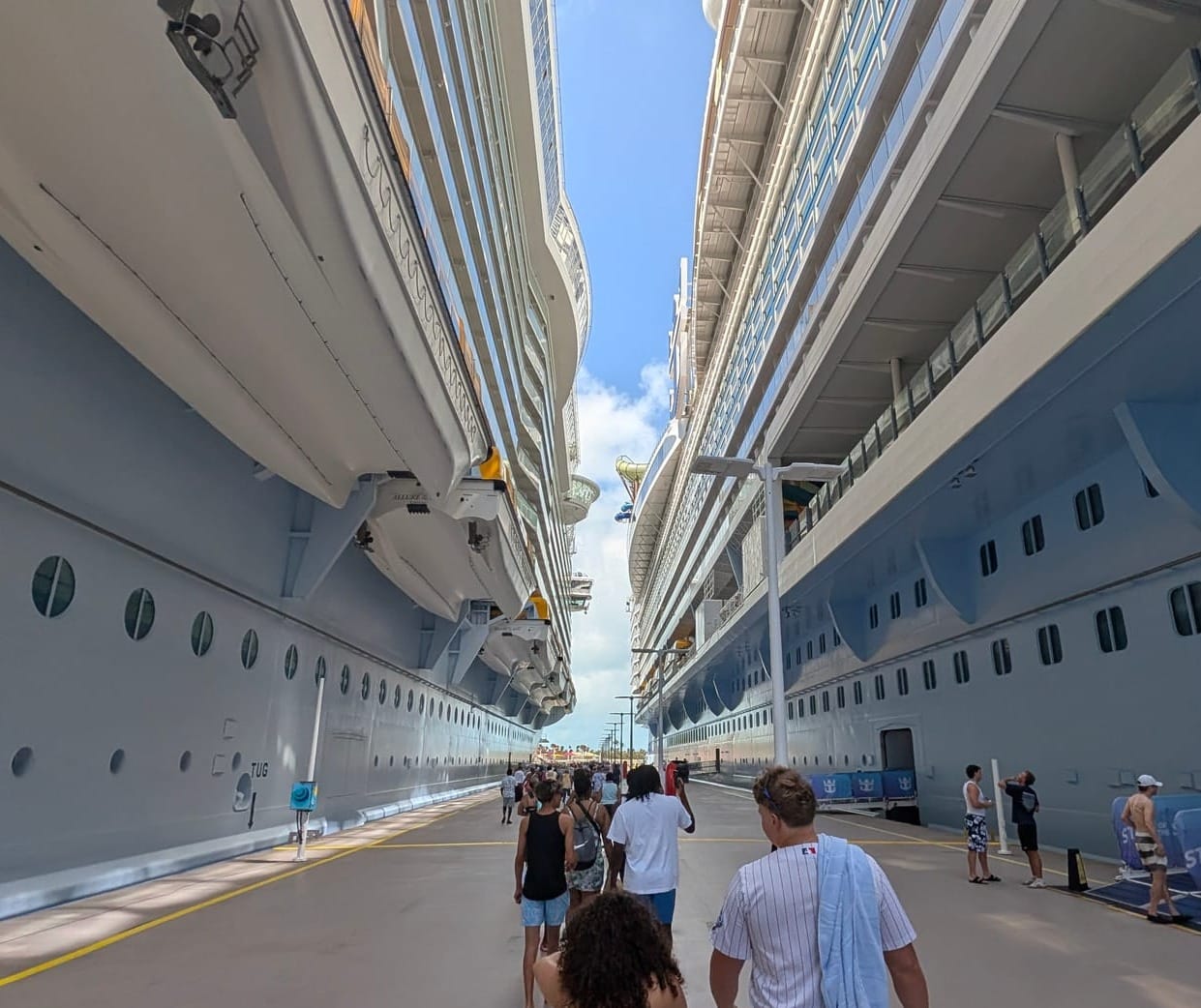
Then it has to get to you, which is the hard part, because a cruise ship is a giant steel box. A Cisco engineer put it this way: a single ship can run as many access points as a stadium, and 4,000 of them on one ship is not unusual. The trick is putting an access point in nearly every cabin, because the same heavy steel that makes coverage hard also keeps the signal trapped in the room with you. That answered my bathroom problem. The strongest signal is out in the public spaces, and the dead spots are the enclosed metal corners. A bathroom, inside a cabin, inside a hull.

But the Wi-Fi is the part you are supposed to notice, because you paid for it. What gets me is everything you are not. A ship almost identical to mine, built more than a decade ago, shipped with around 1,100 surveillance cameras, a phone and wireless in every single cabin, and a few hundred networked touchscreen signs just to tell you where the next show is. None of which you think about as technology while you are handing over the key card that is also your room key, your wallet, your bar tab, and your boarding pass. Or while several thousand people board in a single afternoon. Or while something, somewhere, spreads the crowds out so the place never feels as packed as it is. There is far more IT than meets the eye, and that is the entire point. You are on a floating amusement park, and nobody wants you to see the wiring.
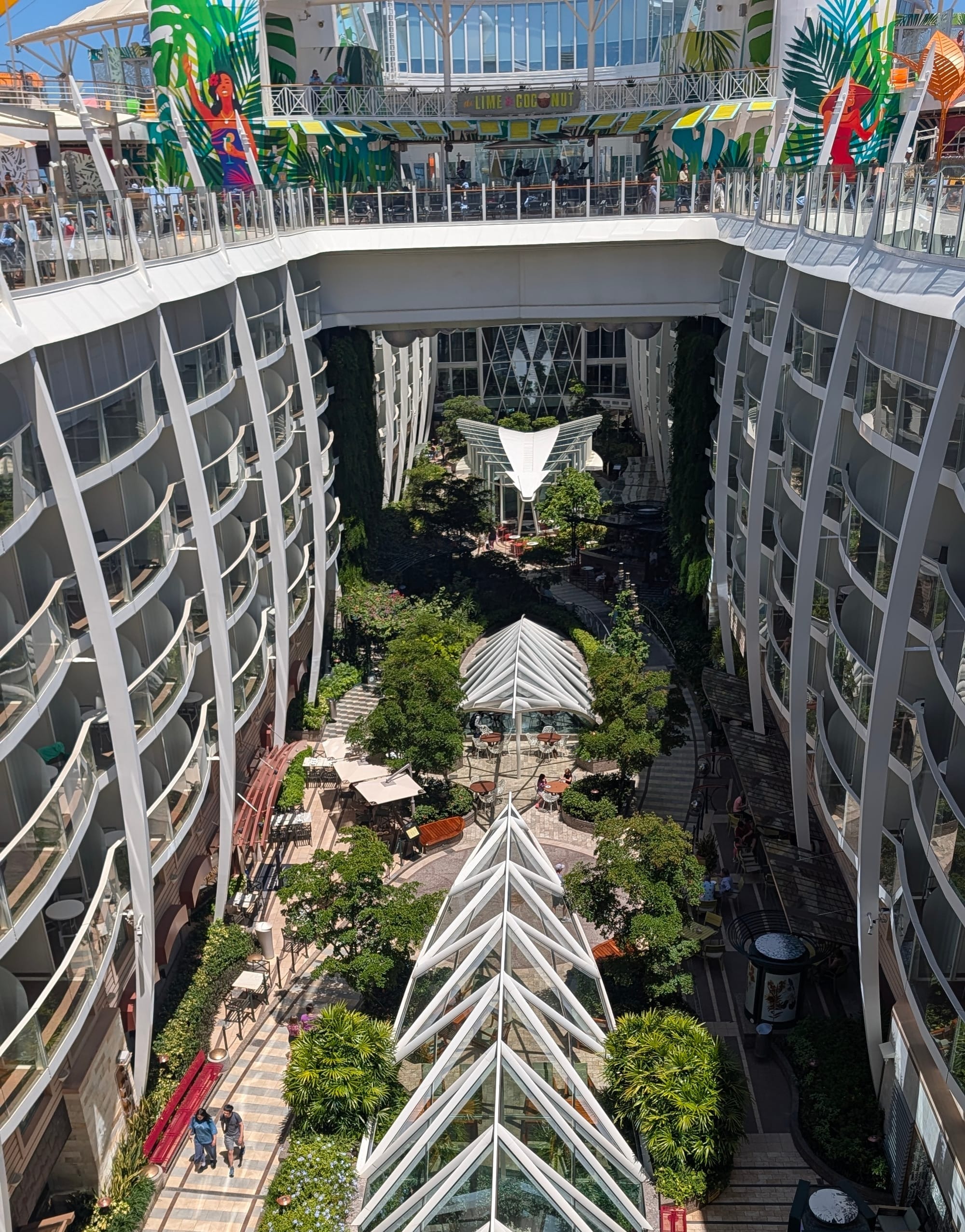
Which is what got me thinking. Tourists are some of the most complaint-prone people alive, so the second anything breaks, everyone hears about it. But that is the goal. If one small glitch is the thing that stands out, the rest of the machine is running so well that the glitch is all there is to notice. The frozen video in my bathroom became the running joke of the trip precisely because nothing else broke. It was the one spot where the illusion slipped, and it slipped only because everything around it was holding.
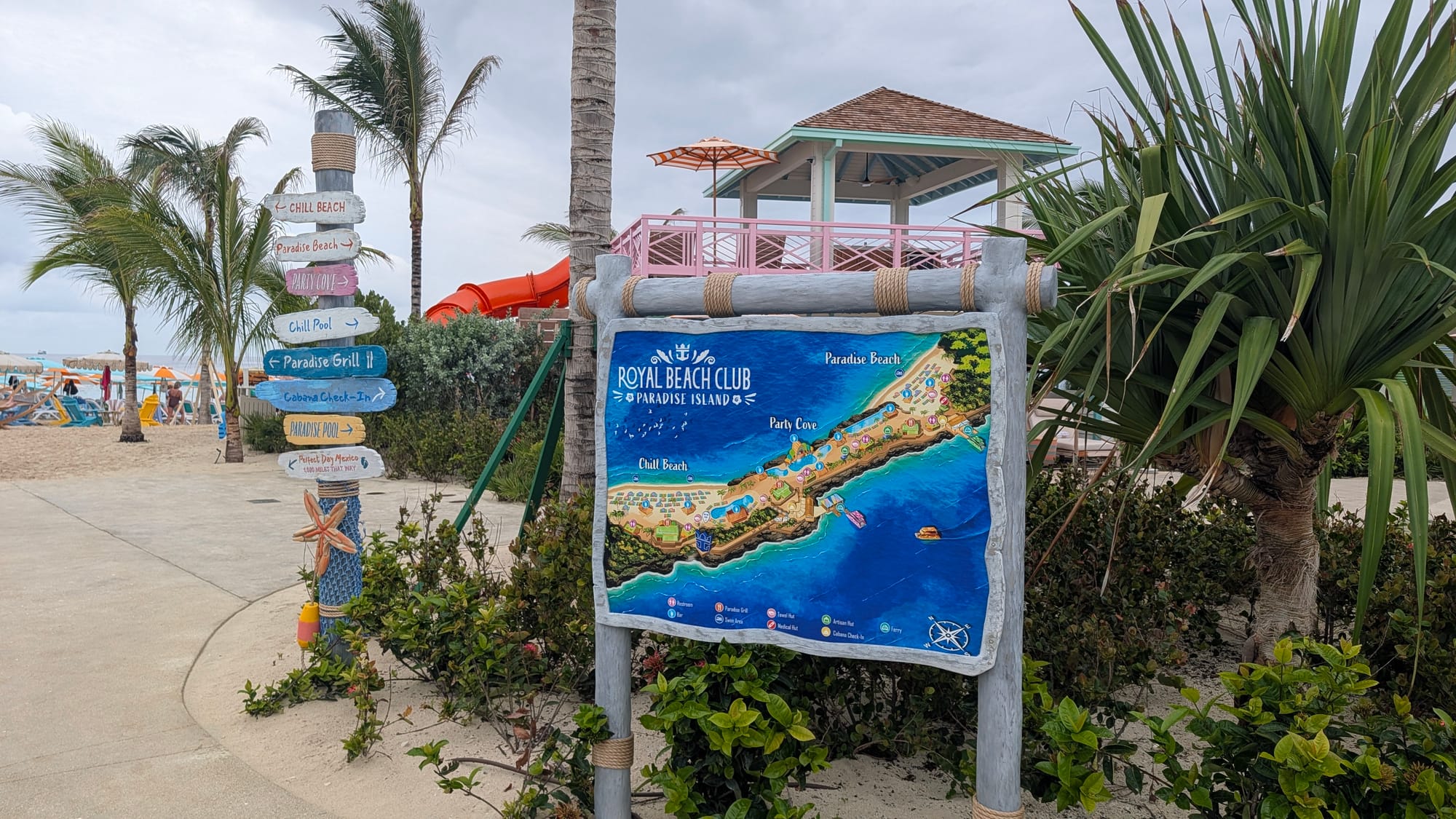
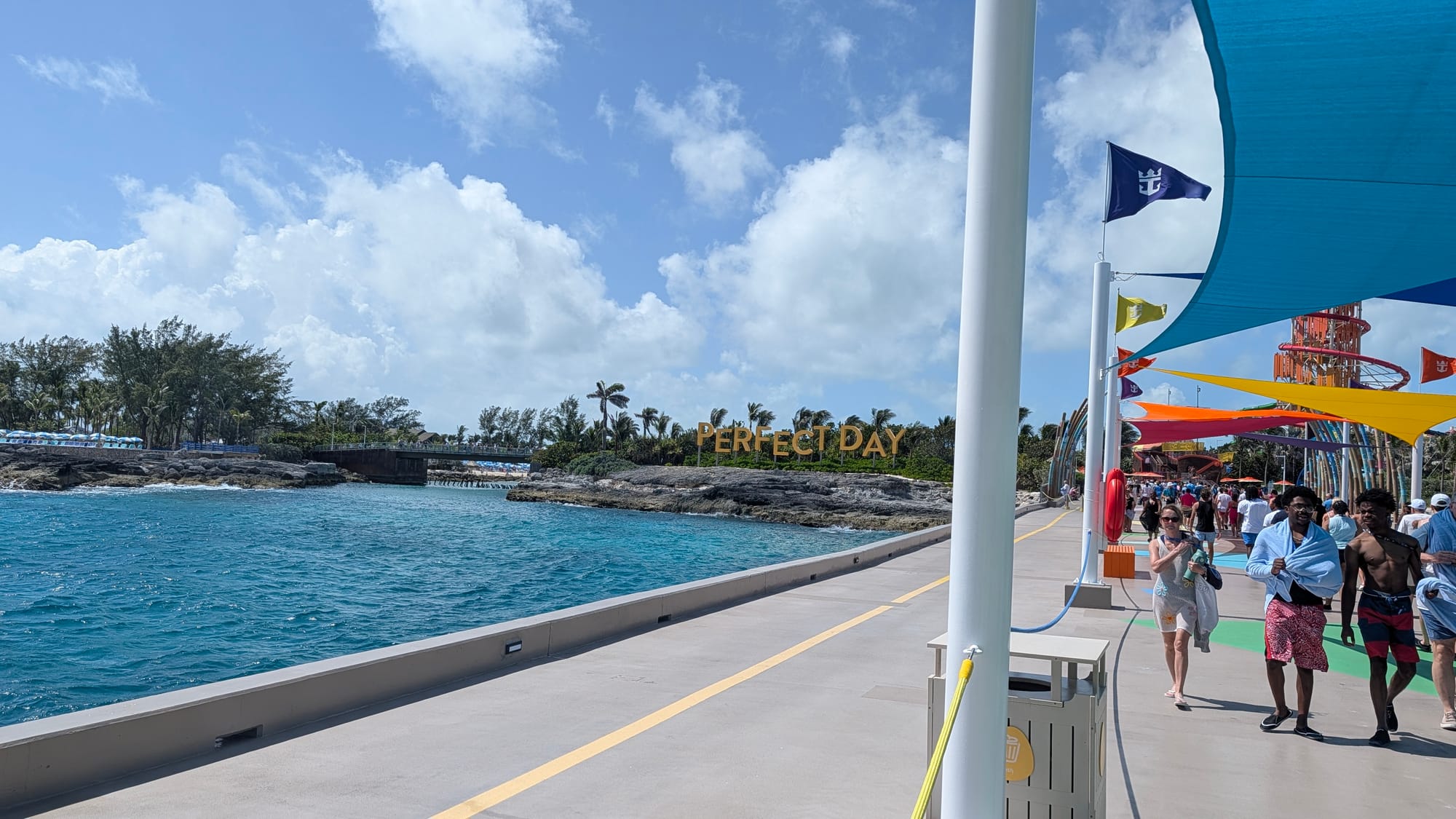
The same thing happened the second we stepped off the ship. At Perfect Day at CocoCay and at the new Royal Beach Club, there was full Wi-Fi too. I knew where it was coming from. I just wanted to find where they were hiding the APs. They had to be up high, and they had to be physically wired back to something. In most cases they either hid them in fake trees or strapped them to the corner of the signage. There were quite a few, and unless you were really looking for them, they did a great job of both hiding them and covering the whole place.
The not-being-able-to-switch-off part did not bother me, because I was not obligated to do anything with it. It was more like watching the technology I work with every day show up somewhere completely opposite, somewhere built from the ground up to maintain an illusion. And it made me think about the stakes.
The access points and networks and back-end systems that make a floating amusement park feel effortless are not exotic. The same unremarkable gear, pointed somewhere else, keeps a hospital running, or guards somebody's life savings, or just spares a person a phone call. Same parts, wildly different stakes. That is the part I keep turning over: how the same small handful of tools can be aimed at almost anything. And when all of it clicks into a machine that simply works, I cannot help but appreciate it, whatever job it happens to be doing.
I think I was just an IT guy on vacation.
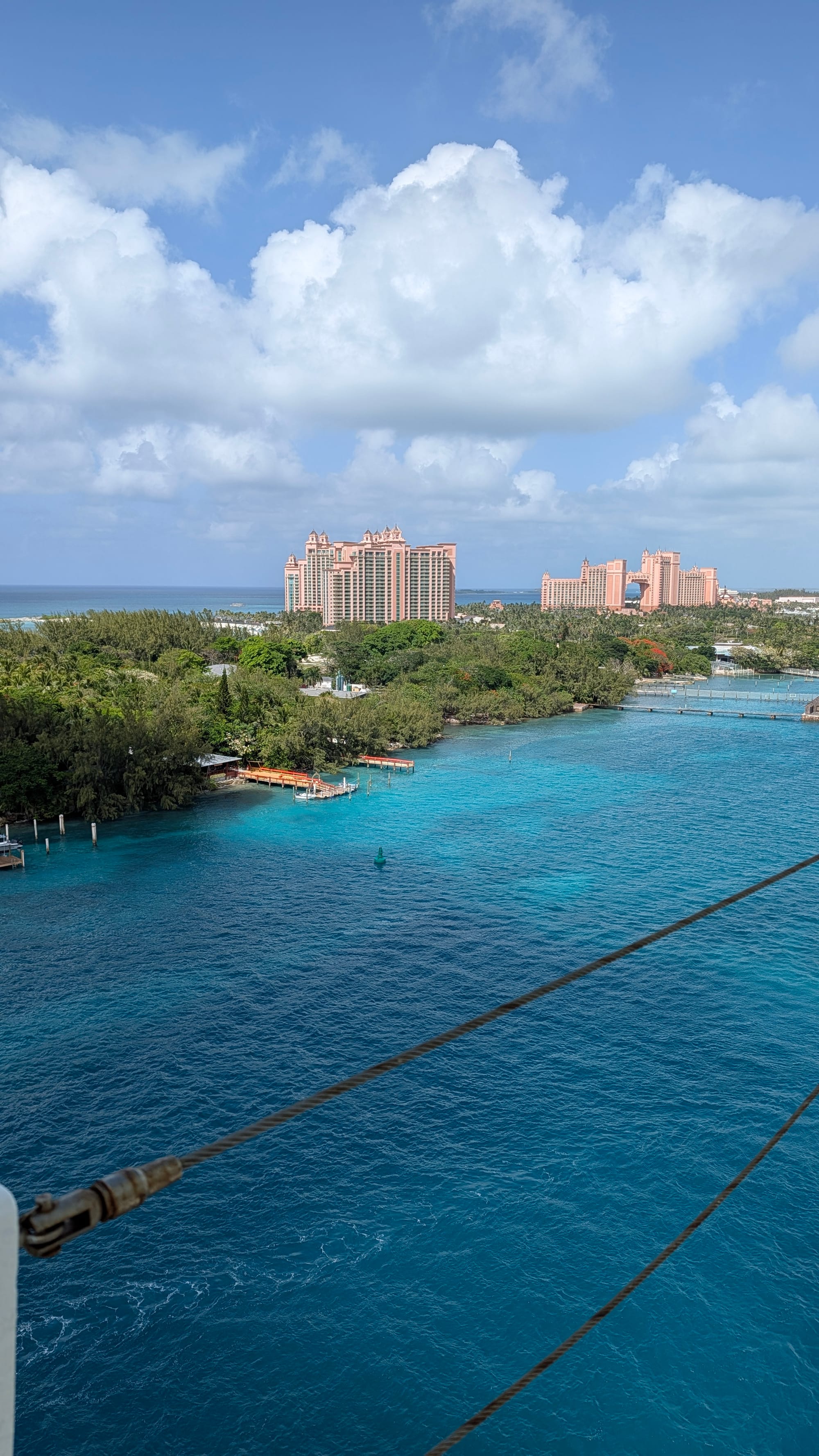
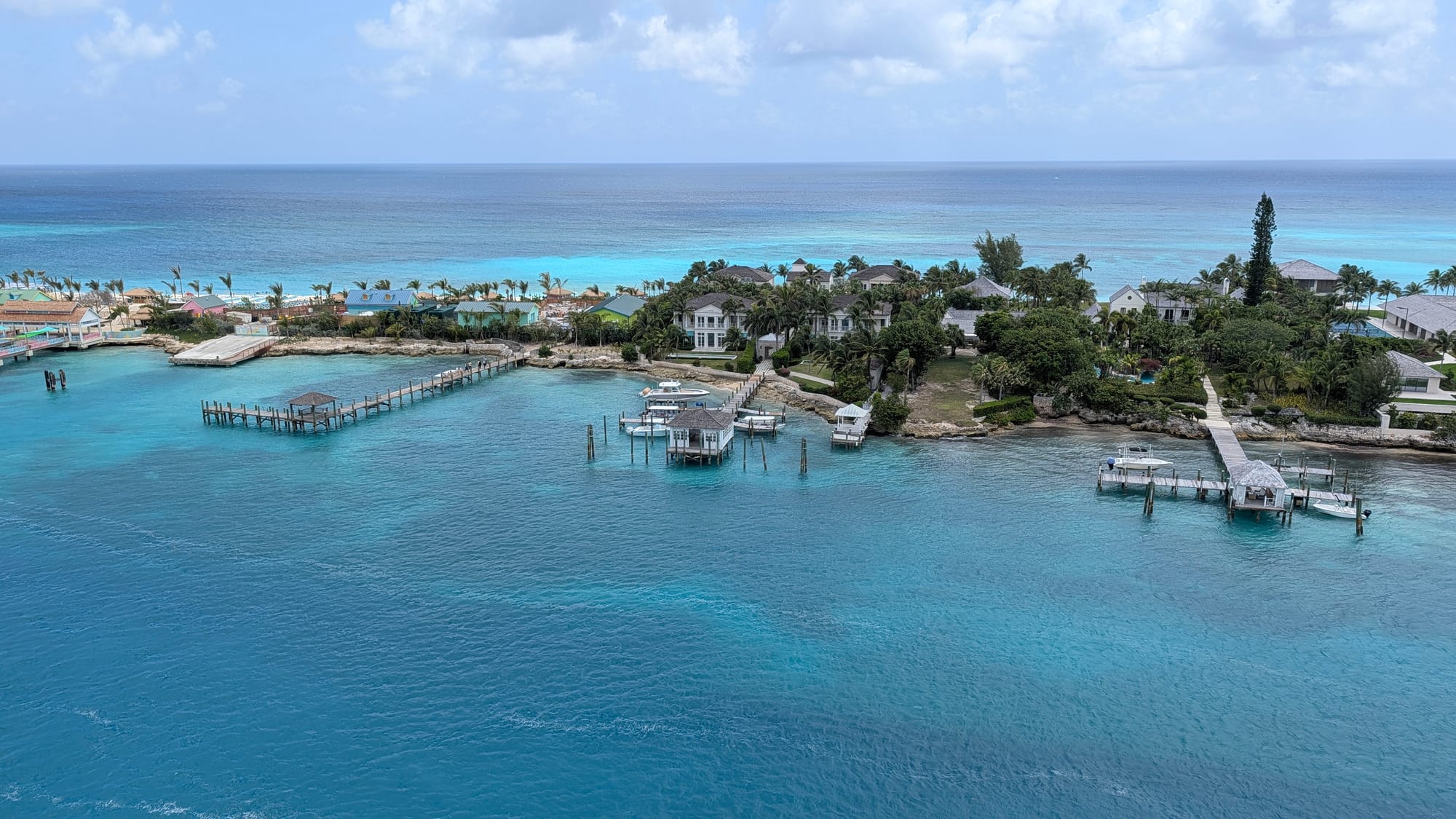
That is most of what was rattling around in my head between pool days. I know it is not what most people are thinking about poolside. If the Wi-Fi did nothing for you, that is fair. Maybe you just came for the Bahama pictures. I took plenty of those too.