The power company is not calling to cut you off in 30 minutes
A call says your electricity goes off within the hour unless you pay right now. Real shutoffs move by mail, and during dangerous heat the shutoff itself can be against the law.

The phone rings on a 95 degree afternoon. The screen shows your power company's name. The voice says your account is past due, a technician is already on the way, and the only way to stop the disconnection is to pay within 30 minutes with a prepaid card from the drugstore.
Hang up. Every detail in that call is a lie, and during dangerous heat, the shutoff it threatens can be against the law.
Summer scams
This scam runs all year, but it surges when the weather turns dangerous. Utilities and the FTC have warned for years that impostor calls climb during heat waves and cold snaps. That's when losing power stops being an inconvenience and starts feeling like a threat to your life.
Early this month the weather gave scammers the perfect opportunity. A heat dome settled over the eastern half of the country. More than 160 million people went under heat alerts. The Department of Energy declared a grid emergency across the 13 states served by PJM, the grid operator for the mid-Atlantic. Air conditioners ran around the clock, and everyone was focused on their electric bill.
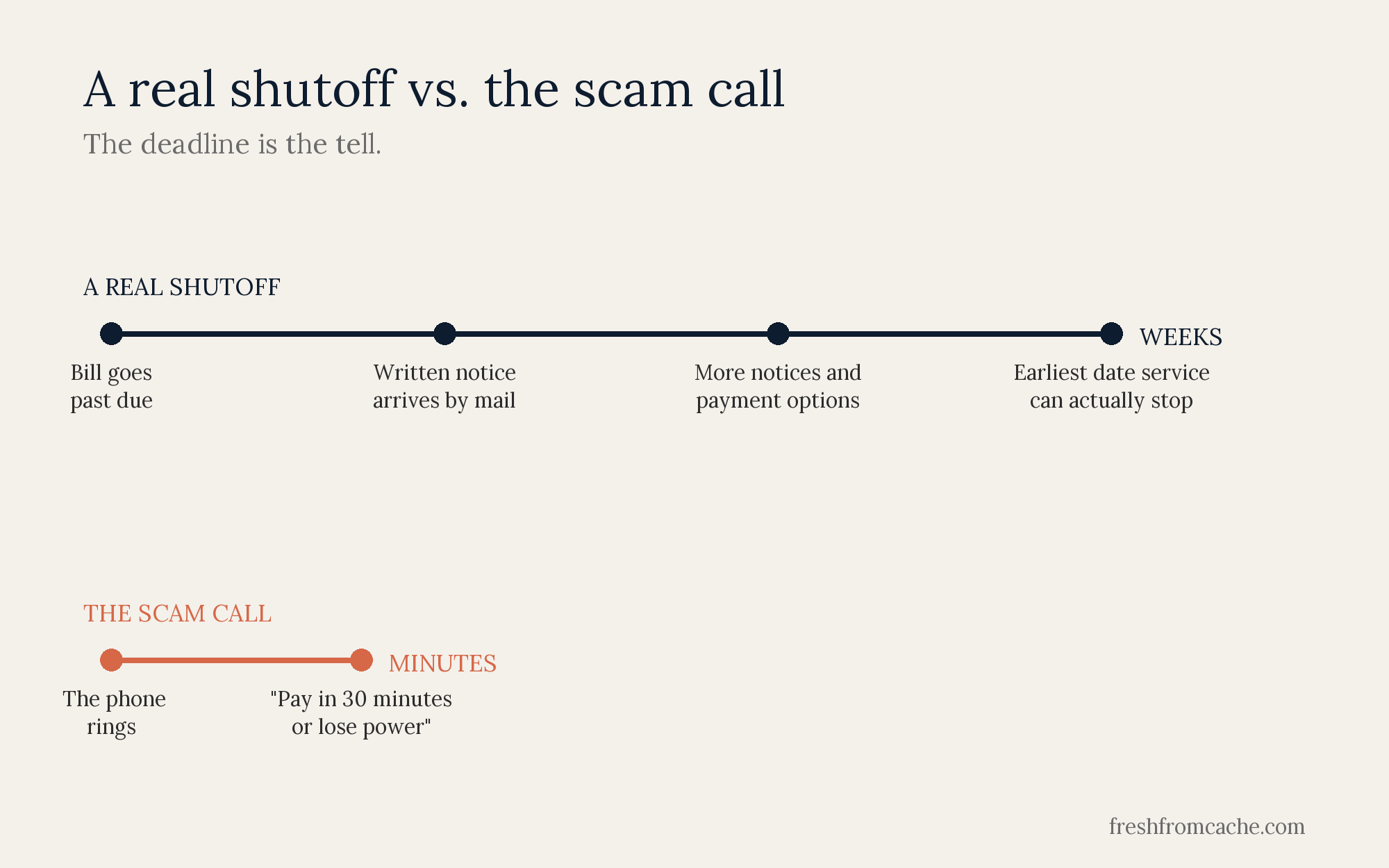
Wisconsin's utility commission put out a reminder at the end of June along with a warning. Threatening a same-day disconnection is the signature of this scam. A real utility will always provide a written timeline instead.
The script
The call barely varies. Your payment failed, or your account fell behind. A crew is on the way. You can stop it if you pay right now, but only the way the caller specifies. Usually a gift card or prepaid card you read the numbers off of. Often they will demand a Zelle transfer, a wire, or cryptocurrency as well. A newer twist on the scam texts you a QR code and tells you to take it to a store and pay at the register. The same scammers run email and text variations spoofing the utility's logo. That's the same impersonation tactic as the phishing emails we've covered.
Caller ID is no protection. Spoofing software lets a caller put any name and number on your screen, including your utility's real 800 number. Some operations staff a fake callback line, with hold music and menus that mimic the real company. All of that production exists to keep you from hanging up and dialing the number printed on your bill. (Your phone can also screen a lot of these calls before they ever ring; we've covered those settings.)
Small businesses get their own variation. Restaurants report these calls arriving during the dinner rush, when the owner will pay almost anything to keep the kitchen running. PG&E logged about 650 reports of scam attempts against its business customers in the first half of 2026.
What a real shutoff looks like
A real disconnection typically arrives slowly. Before shutting anyone off, your utility sends written notice, usually more than one. They'll list the amount owed and the earliest date service could stop. State rules set the timeline, and it runs in weeks. Washington, for example, requires 14 days of written notice for electric and gas.
Your utility may call about a past-due balance. That call is a reminder, and it points you to the normal ways to pay: online, by mail, by bank draft, in person. FirstEnergy, which serves six states, says it in writing on its own scam page: its representatives will not call or email to demand immediate payment to avoid a same-day shutoff.
And no utility in America takes payment in gift cards. The FTC's rule covers all of it: no real business or government agency will ever tell you to buy a gift card to pay them.
In a heat wave, the threatened shutoff can be illegal
During dangerous heat, a growing number of states forbid utilities from disconnecting residential customers at all, paid up or not.
Washington bars electric and water shutoffs for nonpayment on any day the National Weather Service has issued a heat alert for your area.
Oregon requires its regulated electric utilities (Portland General Electric, Pacific Power, and Idaho Power) to pause disconnections on any day with a heat advisory, watch, or warning, and for 48 hours after it ends.
California tightened its rule on July 16: the state's utility commission voted to block disconnections whenever the forecast hits 90 degrees, down from the old trigger of 100.
The LIHEAP Clearinghouse, the federal office that tracks these rules, counts 21 states plus Washington, D.C. with hot-weather shutoff protections. So on the day that call comes in, the disconnection it threatens may be one your utility could not legally perform even if you never paid another bill.
Two caveats to these rules. First, they mostly bind the big regulated utilities; if your power comes from a rural cooperative or a small city utility, your state's laws may not reach it. Washington's law does cover public utility districts and city utilities, so that gap is smaller in the Northwest. Second, a heat pause only delays a shutoff. The balance is still owed when the weather breaks.
If you really are behind on the bill
This scam works best on the person who really is behind. The debt is real, so the threat feels real. That sense of shame can cloud people's judgment. If that's you, know that your utility would rather put you on a plan than shut you off; a disconnection costs them money too.
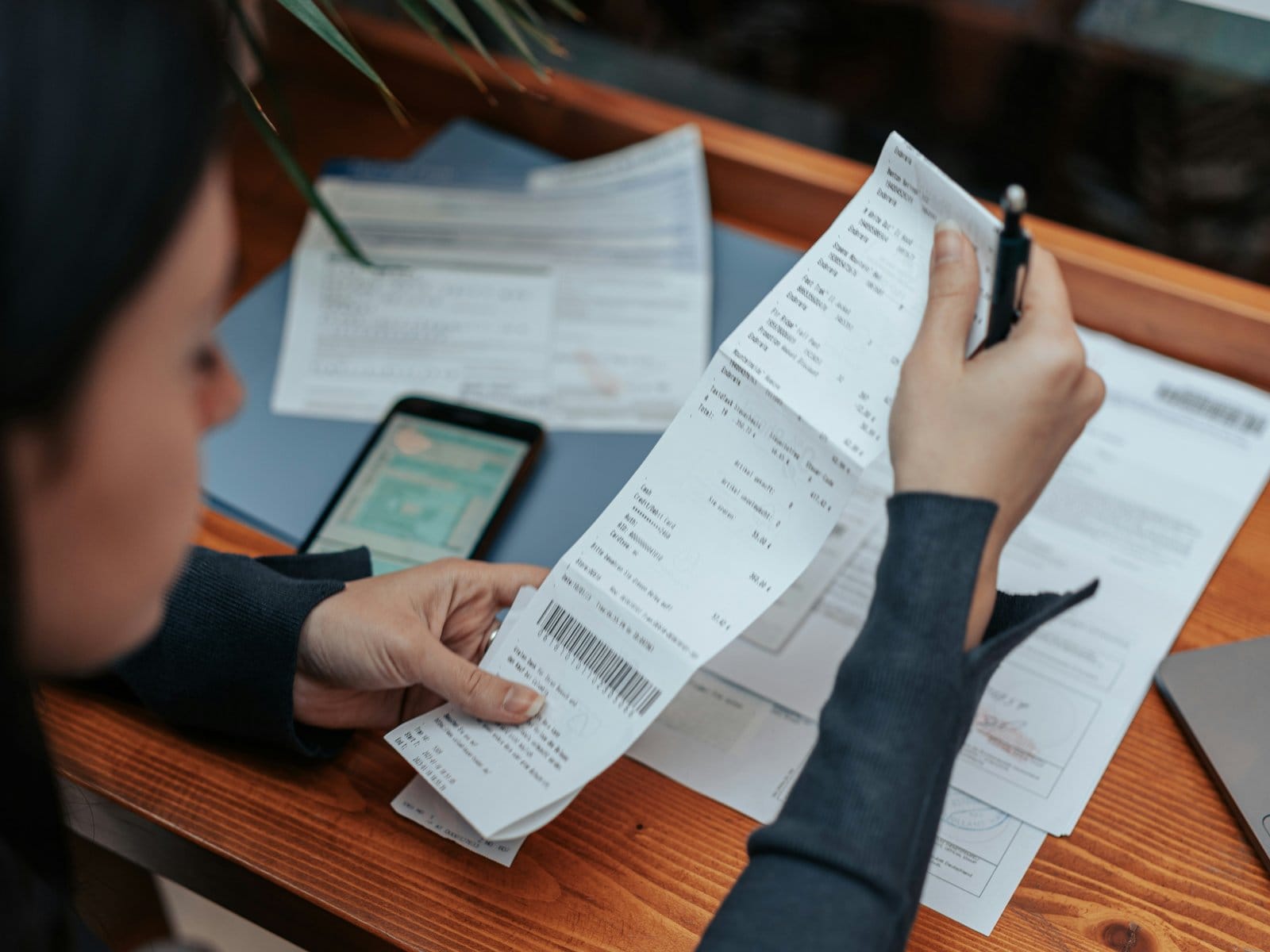
Defeating the scam requires familiar advice: call the number printed on your bill. Ask for a payment arrangement. Every regulated utility offers them, and getting on one typically stops the disconnection process. Then ask about assistance. LIHEAP, the federal energy assistance program, helped pay the utility bills of nearly 6 million households in its last reported year, and the money usually goes straight to the utility.
In Oregon it runs through Oregon Housing and Community Services and your local community action agency, and PGE and Pacific Power customers can also use the year-round Oregon Energy Assistance Program. In Washington, apply through the Department of Commerce's local providers. In California, apply through the Department of Community Services and Development's local agencies, and ask about CARE, the discount program that takes 20 to 35 percent off the electric bill depending on the utility. Anywhere in the country, dialing 211 connects you with local utility help.
Those lines do not have people that will shame you. Signing people up is why they are there.
If you already paid a caller
Move fast; the first hours matter most.
Call the gift card company at the number on the back of the card and ask them to freeze it. For Zelle, call your bank; since last summer, banks in the Zelle network investigate impostor scams reported within 120 days. Then report it to your real utility so it can warn other customers.
We published a full first-hour playbook this week that walks you through the whole sequence in order, including the follow-up scam where someone calls offering to "recover" your money for a fee.
Look up the number yourself
Earlier this month we covered a hospital letter that looked like a scam and turned out to be real. This scam runs in the other direction. That letter was real, and this call is a fraud. Sorting them out works the same way: never act on the contact that reached you first. Find the number on your bill, or on the company's own website, and place the call yourself.
A direct call to your utility company instantly clarifies where you stand. A real representative can confirm your balance, verify if any disconnection notice is actually scheduled, and walk you through available assistance programs if you are struggling. While fraudsters try to force your hand with a strict 30-minute deadline, verifying the facts on your own terms takes only a couple of minutes.
Sources
- Public Service Commission of Wisconsin, via WBAY: Utilities can't be interrupted during dangerous heat (June 30, 2026)
- CalMatters: California restricts utility shutoffs during dangerous heat (July 2026)
- RCW 80.28.010: Washington's heat-alert shutoff prohibition
- OAR 860-021-0407: Oregon's severe weather moratorium on involuntary disconnection
- LIHEAP Clearinghouse: Disconnect Policies
- LIHEAP Clearinghouse: California profile (LIHEAP and CARE)
- Utilities United Against Scams: Top 10 Impostor Utility Scams
- FTC: Avoiding and Reporting Gift Card Scams
- FirstEnergy: Scams and Fraud
- Oregon Housing and Community Services: Utility bill payment assistance
- Washington Department of Commerce: LIHEAP